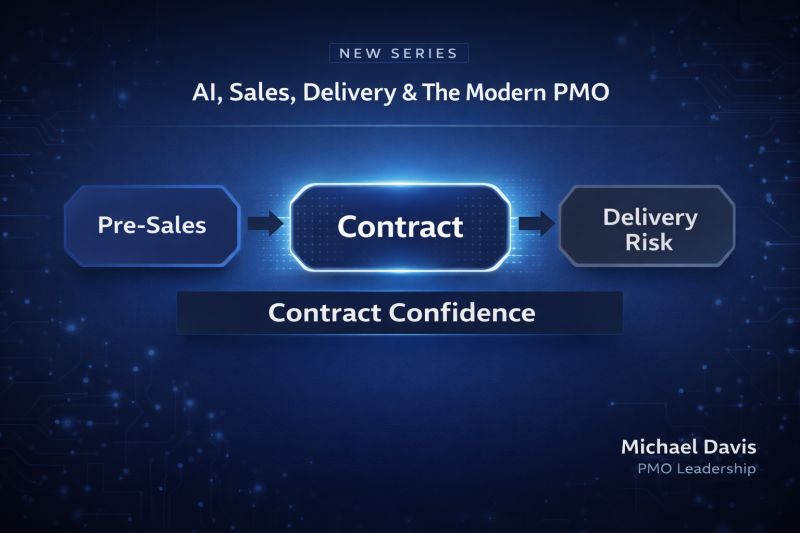
Most delivery problems do not start during execution. They start in contracts.
Common issues include:
- Ambiguous scope
- Optimistic assumptions
- Undefined responsibilities
- Revenue commitments disconnected from capacity reality
By the time the PMO sees the project, risk is often already embedded. This is where AI becomes especially valuable, not for writing proposals, but for analyzing them.
Where AI Adds Value
AI can help bring clarity and structure to contracts before they are finalized. When used effectively, AI can:
- Flag vague scope language
- Surface dependency risks
- Compare historical delivery effort against proposed scope
- Identify margin exposure before the deal is signed
- Highlight where sales commitments exceed workforce capacity
These insights help organizations identify risk earlier and improve agreement quality.
Shifting PMO Involvement Upstream
Traditionally, PMOs inherit risk after contracts are signed. With AI-assisted analysis, the PMO can become involved earlier in shaping agreements.
This shift allows the PMO to:
- Improve scope clarity
- Validate delivery assumptions
- Align commitments with capacity
- Reduce downstream delivery risk
This is not just project automation. It is an evolution in how organizations manage delivery risk.
Better Contracts Create Better Delivery
When contracts are clear and realistic:
- Delivery becomes more predictable
- Risks are identified earlier
- Stakeholder alignment improves
- Margin protection improves
Stronger contracts create a stronger foundation for successful delivery.
Practical Questions to Consider
If you lead delivery or professional services, consider:
- How involved is your PMO before contracts are finalized?
- Are delivery assumptions validated early?
- Is workforce capacity considered before commitments are made?
- Are risks identified before the deal is signed?
These questions help identify opportunities for improvement.
Practical Actions to Improve Contract Confidence
Here are simple ways to strengthen contracts before they become delivery problems:
1. Review Contracts for Delivery Risk, Not Just Commercial Terms
Do not treat the agreement as only a legal or sales document. Review it for scope ambiguity, missing responsibilities, unrealistic assumptions, timeline pressure, and operational dependencies before it is finalized.
2. Use AI to Flag Ambiguity and Exposure
Leverage AI to analyze proposed agreements and identify:
- vague scope language
- unclear ownership
- dependency risks
- margin pressure
- commitments that may exceed available capacity
This helps teams identify delivery risk earlier.
3. Involve Delivery Leadership Before Signature
Bring the PMO, delivery leaders, or operational stakeholders into the review process before commitments are locked in. Earlier involvement improves realism and reduces downstream surprises.
4. Validate Assumptions Against Actual Capacity
Do not assume the organization can absorb every commitment as written. Compare contract expectations against available skills, resource constraints, and delivery timing realities before approval.
5. Create a Structured Pre Signature Review
Build a repeatable review step where commercial, delivery, and PMO perspectives are brought together to validate scope, risk, assumptions, and feasibility before the deal is signed.
Final Thought
AI is not just about improving delivery execution. It can improve delivery before execution even begins.
When AI supports contract analysis:
- Scope clarity improves
- Risks are identified earlier
- PMO influence increases
- Delivery outcomes strengthen
Better contracts lead to better delivery.
If you have questions or would like to discuss this topic further, feel free to get in touch.