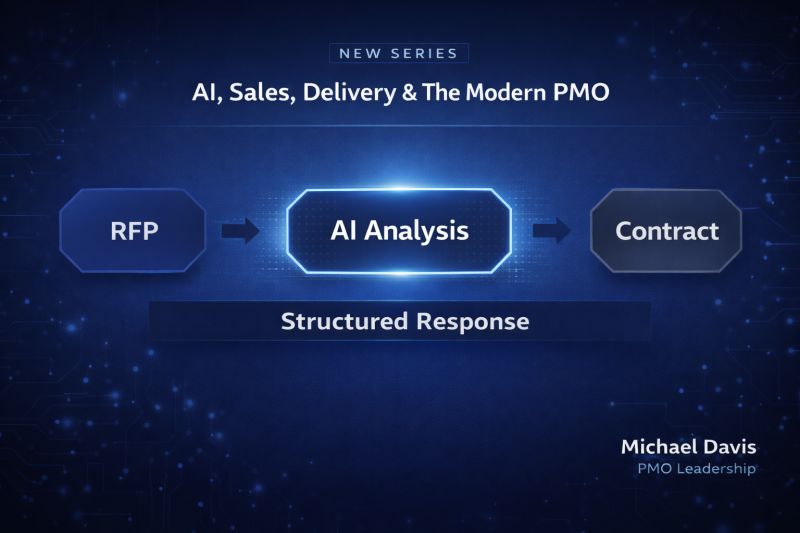
Before the contract.
Before delivery.
Before risk is embedded.
It starts with the RFP.
Most organizations still handle RFP and RFQ responses manually. Teams scramble to interpret requirements, reuse past language, estimate effort, and draft statements of work under tight deadlines.
This is one of the most practical and immediate use cases for AI within a PMO-aligned organization.
Where AI Adds Value in Pre-Sales
AI can help bring structure and clarity to early engagement activities. When applied thoughtfully, AI can support:
- Analyzing RFP requirements and extracting scope themes
- Comparing requested services to historical delivery data
- Identifying gaps, assumptions, and unclear language
- Drafting initial SOW structures aligned to delivery models
- Highlighting where commitments may exceed capacity reality
These capabilities help organizations move from reactive proposal development to structured, informed decision making.
From Reactive to Proactive Delivery
Without structured pre-sales analysis, delivery teams often inherit commitments that were made under pressure. This can introduce risk before the project even begins.
When AI supports pre-sales:
- Scope clarity improves
- Assumptions become visible
- Delivery risks are identified earlier
- PMO involvement begins sooner
This shifts the PMO from reacting to what was sold to influencing how work is shaped before it is sold.
That is a meaningful capability shift.
AI Does Not Replace Judgment
This is not about auto generating proposals and sending them without review. AI should accelerate clarity, not replace experience and leadership.
Strong organizations use AI to:
- Improve analysis
- Surface risks
- Strengthen alignment
- Support informed decisions
Human judgment remains critical.
Practical Questions to Consider
If you are involved in pre-sales or delivery leadership, consider:
- How structured is your RFP analysis today?
- When does the PMO get involved?
- Are assumptions clearly documented?
- Is delivery capacity considered before commitments are made?
These questions help identify where AI can add value.
Practical Actions to Strengthen AI in Pre Sales
Here are simple ways to improve how RFP and RFQ responses are shaped before commitments are made:
1. Standardize How RFPs Are Reviewed
Do not rely on each response team to interpret requirements differently. Establish a repeatable review approach for scope, assumptions, dependencies, timeline expectations, and delivery complexity.
2. Use AI to Extract Requirements and Risk Signals
Leverage AI to analyze incoming RFPs and identify:
- scope themes
- unclear or conflicting requirements
- likely assumptions
- potential delivery risks
- areas that may not align with current capacity
This helps teams respond with better awareness.
3. Compare Requests Against Delivery Reality
Do not evaluate opportunities only from a sales perspective. Review them against historical delivery patterns, team capability, workload pressure, and likely execution constraints before commitments are made.
4. Involve PMO and Delivery Leaders Earlier
Bring project leadership, delivery management, or PMO oversight into the response process before proposals are finalized. Early involvement improves feasibility and reduces downstream surprises.
5. Use the Response Process to Improve Future Quality
Track where RFP responses later created delivery friction, unclear scope, or unrealistic commitments. Use those patterns to strengthen future response reviews and AI prompting over time.
Final Thought
AI in pre-sales is not about automation alone. It is about improving alignment between sales, delivery, and the PMO before commitments are made.
When AI supports pre-sales:
- Scope clarity improves
- Risks are identified earlier
- Delivery becomes more predictable
- PMO influence increases
The strongest projects often begin before the contract is signed.
If you have questions or would like to discuss this topic further, feel free to get in touch.