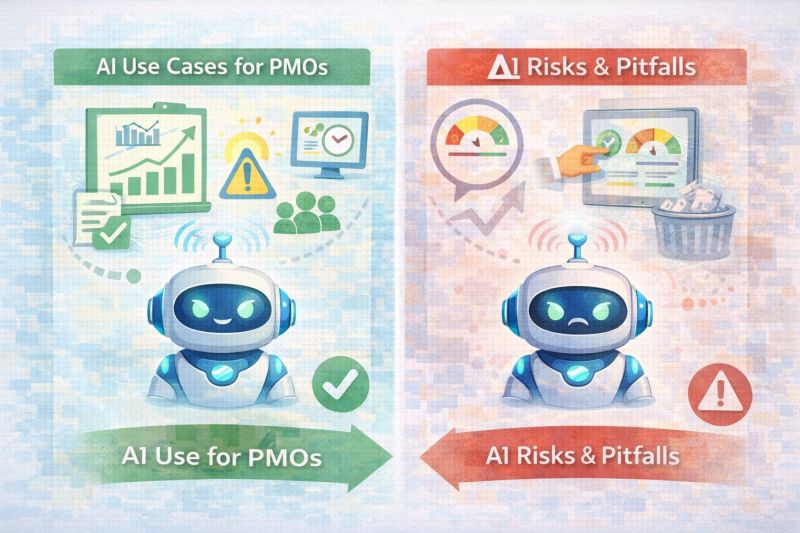
Artificial intelligence is rapidly integrating into project management and PMO environments. However, simply adding AI does not guarantee better delivery. When used effectively, AI can remove friction and improve insight. When misused, it can amplify noise and create false confidence.
AI is a powerful enabler, but it is not a replacement for leadership and judgment.
Where AI Actually Helps
AI can support project managers and PMOs in meaningful ways, particularly in areas that involve large amounts of data or repetitive work.
AI is especially useful for:
- Portfolio prioritization and scenario planning
- Early risk and trend detection
- Status updates, notes, and summaries
- Continuous improvement insights
- Capacity and workforce planning
These capabilities help reduce administrative overhead and improve visibility.
What AI Does Well
When applied thoughtfully, AI can:
- Reduce reporting overhead
- Accelerate insight generation
- Improve data consistency
- Free project managers to focus on leadership
These benefits allow PMs to spend more time driving outcomes instead of chasing updates.
Where Teams Get It Wrong
AI can also introduce risk when used without proper context or governance.
Common mistakes include:
- Trusting outputs without context
- Replacing judgment with dashboards
- Automating broken processes
- Confusing activity with insight
These issues can create the illusion of control without improving delivery.
What AI Cannot Replace
AI can capture meetings, draft reports, and identify patterns. However, it cannot replace key project leadership responsibilities.
AI cannot:
- Make tradeoffs
- Understand stakeholder dynamics
- Protect teams from poor decisions
- Own delivery outcomes
These responsibilities remain with project managers and PMO leadership.
AI Requires a Strong Operating Model
Successful AI adoption depends on governance, process, and leadership. The operating model surrounding AI is more important than the technology itself.
Strong PMOs use AI to:
- Enhance decision making
- Improve signal quality
- Support delivery leadership
- Reduce administrative overhead
AI should strengthen project management, not make it more superficial.
Practical Actions to Use AI More Effectively in PM and PMOs
Here are simple ways to apply AI in ways that improve delivery without weakening leadership:
1. Start With a Real Use Case
Do not adopt AI just because it is available. Focus first on areas where it can reduce manual effort, improve visibility, or strengthen decision support, such as summaries, reporting support, trend analysis, or capacity insights.
2. Keep Human Review in the Process
AI should accelerate preparation, not replace judgment. Review outputs before decisions are made, especially when the content affects planning, risk, priorities, or stakeholder communication.
3. Fix Weak Processes Before Automating Them
Do not use AI to speed up broken reporting, unclear governance, or poor intake discipline. Improve the underlying process first so automation strengthens the work instead of amplifying problems.
4. Define Where AI Supports Versus Where Leaders Decide
Be clear about what AI is being used for and where human ownership remains. AI can support insight, but tradeoffs, stakeholder decisions, accountability, and delivery leadership still belong to people.
5. Build Simple Governance Around AI Use
Set expectations for how AI outputs are reviewed, how sensitive information is handled, and where AI is appropriate in the delivery lifecycle. Even light governance can reduce misuse and improve trust.
Final Thought
AI is a powerful tool, but it must be used intentionally.
When organizations apply AI thoughtfully:
- Insight improves
- Friction decreases
- Decisions become faster and more informed
- Project managers focus on leadership
The goal is not to manage more data. The goal is to make better decisions, faster.
AI should enhance project management, not replace it.
If you have questions or would like to discuss this topic further, feel free to get in touch.