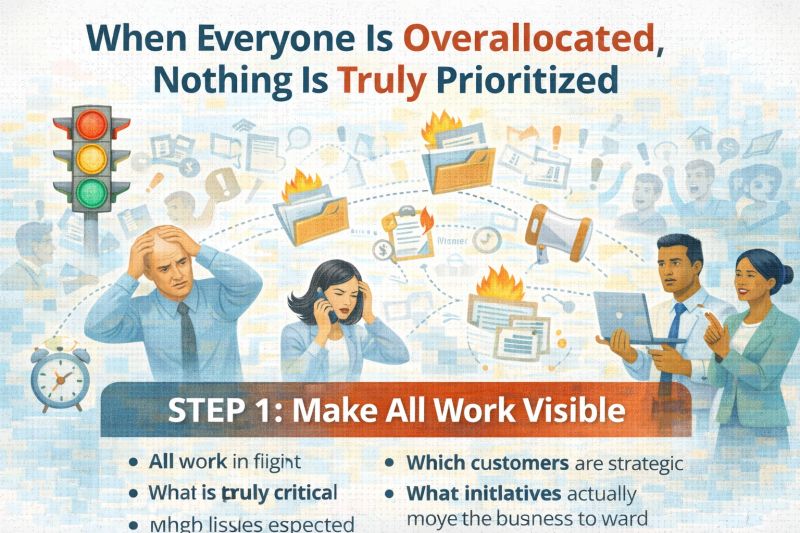
Too many teams are juggling priorities that change more often than traffic lights in New York. Everyone is overallocated, constantly context switching, and chasing the work with the loudest voice or the biggest fire attached to it.
The result is a lot of motion, very little progress, and a delivery model that is not sustainable.
This is not a motivation problem.
This is a clarity problem.
The Problem with Overallocation
When teams are overallocated, priorities lose meaning. Everything appears urgent, and project managers are forced into constant replanning.
Common symptoms include:
- Constant context switching
- Frequent priority changes
- Delayed delivery
- Team burnout
- Reactive execution
When everything is prioritized, nothing truly is.
Prioritization Starts with Visibility
Before capacity planning can help, organizations must clearly understand:
- All work in flight
- What is truly critical
- Which customers are strategic
- What initiatives move the business forward
Without this visibility, teams are forced into reactive planning while priorities shift daily.
Leadership Needs the Full Picture
Real prioritization only happens when decision makers see the full demand picture. When leaders understand capacity constraints, meaningful tradeoffs become possible.
This is where capacity planning moves from theory to practical value.
When leaders see:
- Competing priorities
- Limited capacity
- Resource constraints
They can make informed decisions that reduce overallocation and improve delivery.
Step 1: Make All Work Visible
The first and most important step is visibility.
Every project, initiative, request, and commitment must be visible before prioritization and capacity planning can work effectively.
Visibility enables:
- Better prioritization
- Realistic commitments
- Meaningful tradeoffs
- Reduced overallocation
Without visibility, prioritization becomes guesswork.
Practical Actions to Reduce Overallocation and Strengthen Prioritization
Here are simple ways to improve focus when everything seems urgent:
1. Make All Work Visible in One View
Do not let projects, operational requests, leadership asks, and customer commitments live in separate places. Bring all meaningful work into a shared view so prioritization starts from reality.
2. Define What Truly Deserves Priority
Establish clear criteria for what should rise to the top, such as strategic value, customer impact, revenue importance, risk exposure, or regulatory need. Without criteria, priority becomes whoever speaks the loudest.
3. Review Capacity Before Adding More Work
Before approving new initiatives or shifting direction, evaluate the current demand on teams and the likely impact on in flight work. This helps prevent hidden overload from becoming normal operating behavior.
4. Force Tradeoff Decisions at the Leadership Level
When capacity is constrained, adding something important should trigger a decision about what slows down, pauses, or stops. Prioritization is not real until tradeoffs are made.
5. Reassess Overallocation Regularly
Overallocation is not a one time issue. Build regular portfolio or leadership reviews where workload, priority shifts, and delivery pressure are examined before teams hit burnout.
Final Thought
When everyone is overallocated, progress slows and teams struggle to deliver meaningful outcomes.
When organizations create visibility and prioritize intentionally:
- Focus improves
- Delivery becomes more predictable
- Teams avoid burnout
- Progress accelerates
Capacity planning begins with clarity. Make all work visible and prioritization becomes possible.
If you have questions or would like to discuss this topic further, feel free to get in touch.