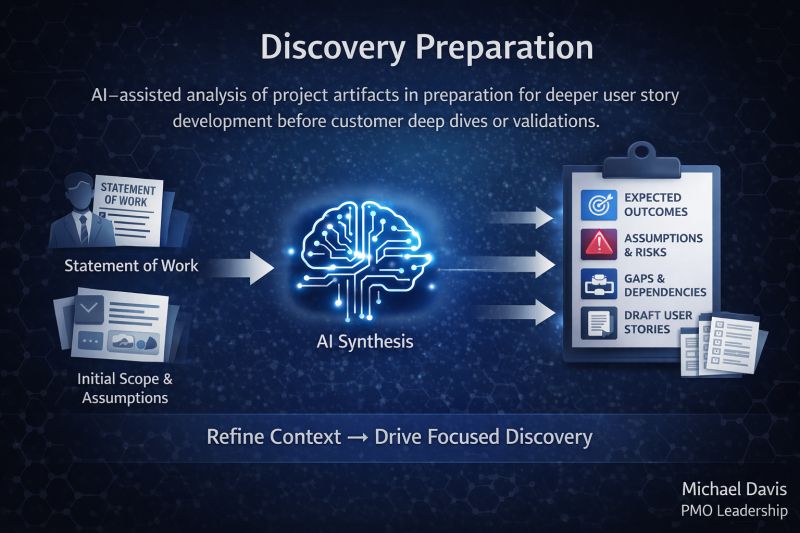
Discovery is often viewed as the first phase of a project. In reality, discovery should begin well before the first session.
By the time a project reaches discovery, a significant amount of information already exists:
- Statements of work
- Project charters
- Sales discussions
- Initial assumptions and constraints
Despite this, many teams approach discovery as if they are starting from scratch. This slows momentum and increases the risk of missed insights.
Where AI Strengthens Discovery Preparation
AI can help teams enter discovery with structure and context. By analyzing available project artifacts, AI can create a clearer starting point before engaging with the customer.
AI can:
- Synthesize known requirements and objectives
- Identify gaps between stated scope and expected outcomes
- Highlight assumptions that require validation
- Surface risks and dependencies early
- Prepare draft user stories or discovery questions
This allows teams to begin discovery with focus instead of uncertainty.
From Guessing to Validating
When discovery begins without preparation, teams often spend time gathering basic information that already exists. This leads to:
- Repeated conversations
- Missed assumptions
- Delayed alignment
- Slower delivery momentum
When AI supports discovery preparation, teams can:
- Ask better questions
- Validate assumptions
- Refine requirements
- Accelerate alignment
Discovery becomes more intentional and productive.
Strong PMOs Start Discovery with Clarity
The goal is not to replace discovery. The goal is to make discovery more focused and effective.
Strong PMOs:
- Prepare before discovery
- Surface risks early
- Align stakeholders faster
- Improve delivery readiness
Discovery is not just a meeting. It is a critical alignment phase that benefits from preparation.
Practical Actions to Strengthen Discovery Preparation
Here are simple ways to improve discovery before the first meeting begins:
1. Gather Existing Inputs Early
Pull together the statement of work, charter, sales notes, assumptions, constraints, and any prior discussions before discovery starts. This creates a more informed starting point.
2. Identify What Is Known and Unknown
Separate confirmed information from assumptions or open questions. That makes discovery more focused and reduces wasted time.
3. Use AI to Prepare Draft Questions
Leverage AI to analyze project artifacts and generate:
- discovery questions
- requirement themes
- dependency concerns
- early risk areas
This helps teams walk in prepared instead of reactive.
4. Validate Scope and Outcomes Early
Use the available inputs to compare stated scope against expected business outcomes. This helps surface mismatches before they become delivery issues.
5. Start Discovery with Structure
Do not begin with a blank page. Enter discovery with prepared context, draft focus areas, and a plan for what needs validation.
Final Thought
Discovery should not start at the first meeting. It should start with context and clarity.
When AI supports discovery preparation:
- Conversations become more focused
- Risks are identified earlier
- Alignment improves faster
- Delivery outcomes improve
How prepared are your teams before discovery sessions begin?
If you have questions or would like to discuss this topic further, feel free to get in touch.