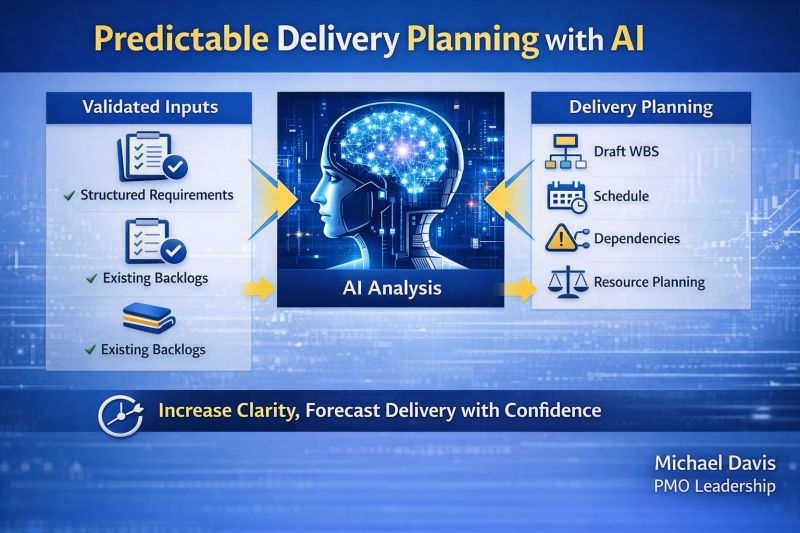
Once discovery and requirements take shape, teams transition into planning. This is where projects move from ideas to execution.
Planning typically involves:
- Work breakdown structures
- Schedules
- Sprint planning
- Resource alignment
- Estimated timelines
However, planning often begins with fragmented context and manual interpretation. This can lead to unrealistic timelines, missed dependencies, and delivery risk before execution even starts.
Where AI Improves Planning Quality
AI can help strengthen planning by analyzing validated discovery outcomes and structured requirements. This creates a more informed starting point for delivery planning.
AI can assist with:
- Draft WBS development
- Mapping dependencies across workstreams
- Suggesting schedule frameworks
- Preparing sprint loading
- Providing resource demand visibility
- Offering timeline estimation inputs
This helps teams move from assumptions to structured planning.
Planning With Confidence
The goal is not to automate planning. The goal is to improve delivery confidence before execution begins.
When planning is grounded in structured inputs:
- Rework is reduced
- Dependencies are clearer
- Timelines become more realistic
- Forecasting accuracy improves
This is where delivery maturity begins to take shape.
Better Planning Drives Faster Value
Strong planning improves execution. Strong execution accelerates time to value.
When planning improves:
- Teams align earlier
- Risks are identified sooner
- Delivery becomes more predictable
- Customers see value faster
Planning is not just a scheduling activity. It is a delivery confidence activity.
The Role of a Strong PMO
Strong PMOs do not just build schedules. They enable confident delivery planning.
When AI supports planning:
- Clarity improves
- Dependencies become visible
- Resource planning strengthens
- Execution becomes more predictable
Practical Actions to Improve Planning Readiness
Here are simple ways to strengthen the transition from requirements into delivery planning:
1. Confirm Requirements Before Planning Begins
Do not move into planning with partially understood inputs. Validate scope, requirements, assumptions, and priorities first so planning starts from a more reliable foundation.
2. Use AI to Organize Planning Inputs
Leverage AI to review validated requirements and discovery outputs to help structure:
- draft work breakdown elements
- dependency groupings
- likely sequencing needs
- resource demand themes
- timeline considerations
This gives planners a stronger starting point.
3. Surface Dependencies Early
Planning often fails when teams discover cross functional dependencies too late. Use planning reviews and AI assisted analysis to identify workstream relationships before execution begins.
4. Treat Estimates as Decision Inputs, Not Certainty
Use early estimates to guide planning discussions, but validate them with delivery leads and technical owners before treating them as fixed commitments.
5. Align Planning Across Delivery Leaders
Bring project management, delivery leadership, architects, and resource owners into the planning conversation early so sequencing, constraints, and ownership are better aligned before execution starts.
Final Thought
Planning should not begin with guesswork. It should begin with clarity.
When AI supports structured planning:
- Confidence improves
- Risk decreases
- Alignment strengthens
- Time to value accelerates
How does your team currently transition from requirements into delivery planning?
If you have questions or would like to discuss this topic further, feel free to get in touch.