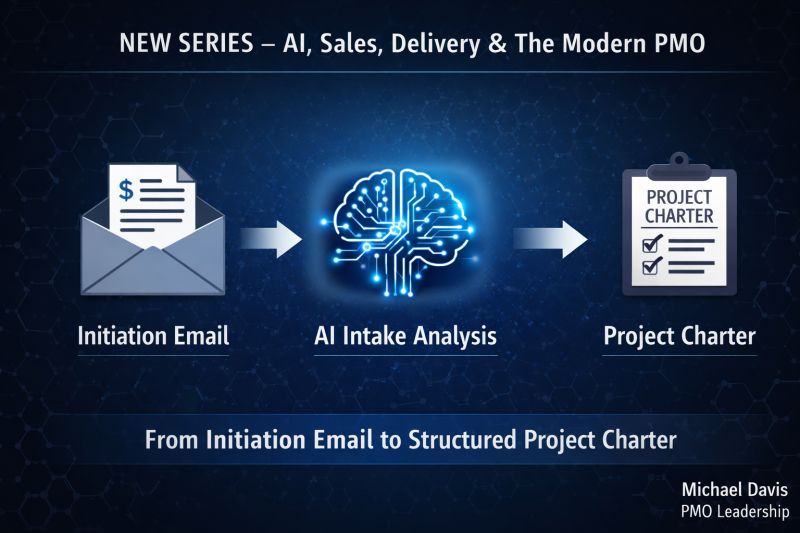
Many projects do not start with a structured intake process. They often begin with an email, a message from sales, a request from leadership, or a forwarded SOW with a brief description of what needs to be done.
This leads to a familiar scramble for the PMO:
- What is the scope?
- Who owns the outcome?
- What are the success criteria?
- What teams are required?
When intake is unstructured, clarity is delayed and delivery risk increases from the very beginning.
Where AI Reduces Intake Friction
AI can help bring structure and consistency to project intake. By analyzing initiation emails, signed SOWs, and related documentation, AI can extract key delivery information.
AI can:
- Identify scope objectives and key deliverables
- Extract stakeholders and responsible teams
- Surface timeline expectations and dependencies
- Identify assumptions and constraints
- Generate a structured project charter draft for PMO review
This accelerates clarity and reduces manual effort.
From Informal Requests to Structured Intake
AI can also support or automate the intake process by:
- Capturing incoming requests
- Organizing required details
- Identifying missing information
- Preparing structured initiation documentation
This helps standardize how projects begin and reduces delays.
AI Supports Leadership, Not Replaces It
The goal is not to automate project leadership. The goal is to accelerate project clarity.
When intake becomes structured and repeatable:
- Projects start faster
- Risks are identified earlier
- Stakeholder alignment improves
- Delivery planning becomes more effective
This allows project managers to focus on leadership and execution.
The Role of a Strong PMO
Strong PMOs do not just manage projects. They create clear project starting conditions.
Structured intake helps:
- Improve delivery predictability
- Reduce startup friction
- Strengthen governance
- Improve stakeholder alignment
This is where operational maturity begins.
Practical Actions to Improve Project Intake
Here are simple ways to make project intake more structured and more useful from the beginning:
1. Standardize What Every Request Must Include
Require core intake details such as:
- business objective
- scope summary
- requested timeline
- stakeholders
- expected deliverables
- known dependencies or constraints
This reduces ambiguity before delivery planning begins.
2. Gather Source Inputs in One Place
Bring together the intake email, SOW, sales notes, leadership request, or related documentation before formal review begins. This gives the PMO a clearer starting point and reduces fragmented information.
3. Use AI to Draft the Initial Intake Summary
Leverage AI to extract:
- scope objectives
- key stakeholders
- teams involved
- assumptions
- risks
- timeline expectations
This helps the PMO move faster while improving consistency.
4. Identify Missing Information Early
Use the intake process to surface unanswered questions before work begins. Missing success criteria, unclear ownership, and vague deliverables should be flagged before the project is treated as ready to launch.
5. Review Intake Before Moving to Delivery Planning
Do not move directly from request to execution. Validate the intake with the right leaders so priorities, ownership, and expectations are better aligned before kickoff and planning begin.
Final Thought
Projects often succeed or struggle based on how they start.
When AI supports structured project intake:
- Clarity improves
- Risk decreases
- Planning accelerates
- Delivery outcomes strengthen
How structured is project intake in your organization today?
If you have questions or would like to discuss this topic further, feel free to get in touch.