Over the next several weeks, I will be shifting focus to practical applications of AI across pre-sales, delivery, and PMO leadership. This series will focus on real world use, not theory, hype, or generic prompts. The goal is to explore Read More …
Practical guidance for building, leading, and evolving Project Management Offices. Topics include governance, portfolio management, resource management, PMO maturity, and delivering measurable business value.
Over the next several weeks, I will be shifting focus to practical applications of AI across pre-sales, delivery, and PMO leadership. This series will focus on real world use, not theory, hype, or generic prompts. The goal is to explore Read More …
What happens when a PMO is truly enabled instead of simply acknowledged? The impact can be significant. Over the past several weeks, I have shared insights around PMO maturity, governance, workforce planning, risk management, and delivery discipline. Much of that Read More …
Too many teams are juggling priorities that change more often than traffic lights in New York. Everyone is overallocated, constantly context switching, and chasing the work with the loudest voice or the biggest fire attached to it. The result is Read More …
One of the biggest mistakes organizations can make after establishing a PMO is allowing the realization of its contributions to fade. As operations become standardized and delivery stabilizes, the value created by the PMO can become less visible simply because Read More …
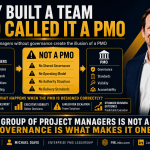
You assembled a team of project managers and called it a PMO. That’s where everything went sideways. The distinction sounds semantic until you realize what it actually means operationally. A PMO is not a department. It’s a governance entity, a Read More …
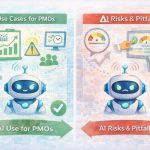
Artificial intelligence is rapidly integrating into project management and PMO environments. However, simply adding AI does not guarantee better delivery. When used effectively, AI can remove friction and improve insight. When misused, it can amplify noise and create false confidence. Read More …
It is a question many project managers have asked at some point. Why are we here? Many organizations hire project managers because they feel like they should, not because they clearly understand the role or the value behind it. As Read More …
In project delivery, a flat “no” is not always the right answer. Many change requests are rejected too quickly because they feel disruptive, inconvenient, or poorly timed. But dismissing them outright can shut down important conversations and damage alignment with Read More …
Some of the biggest impacts to project delivery do not come from execution. They begin with ambiguous contracts. When agreements include vague language such as “migrate accounts” without defining quantities, source platforms, performance expectations, or boundaries, teams are left interpreting Read More …
In many organizations, urgency has replaced prioritization. Everything is labeled critical, escalations bypass governance, and teams are pushed into constant firefighting. The result is not faster delivery. It is distracted delivery, where strategic initiatives stall while operational noise consumes attention. Read More …